Most Influential Photojournalist Photographers
Martin Parr
Unlike the image to the left, Martin's image doesn't have the use of facial expression to help portray the mood within the image. The womans face is replaced with the british flag which becomes the focal point of the image. You soon realise the scene that this photo was taken in by looking at the other objects in the background. From the flag, to the put up chair, to the ice cream van, even to the man wearing a hat and baggy top in the background this image scream Britain on a Summer's day. I like how Martin has captured this, because everytime you look at the image you begin to notice something you didn't notice before. | 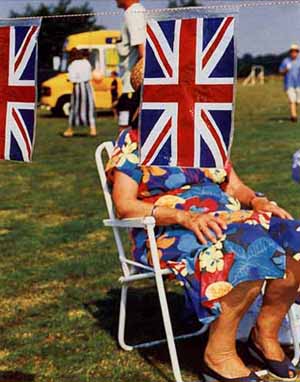 |
Henri Cartier-Bresson
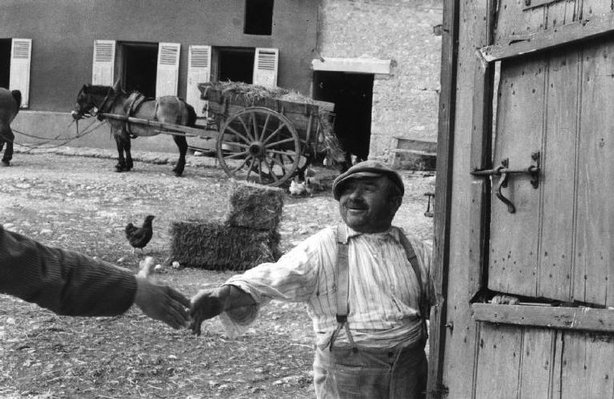 Image from http://blog.ricecracker.net/tag/henri-cartier-bresson/page/2/ | I really like this image of Henri's, because it creates a positive mood where you would of associated poor labour. When first looking at the image your are drawn to the mans smiling face becuase of the arm dircetion and the position of the door. You then begin to notice the background objects, such as the horse and hay cart, chicken and the small barn house, which you relate to what the mans wearing to quickly understand what the mans social class is. The fact he is shaking hands with someone taller, and more smartly dresed puts the farmer at a lower rank then him, but the fact the farmer is smiling creates a positive mood within the image. |
A Quick Look into Fashion Photography
Fashion is all about selling clothes and accessories. I can link it to wedding photography as I am also selling the story within my images. Fashion photography attracts some of the best photographers around the world and is a great influence on photography in general. The items that are trying to be sold must be helped by the angle and style of the photography itself, as if the approach had no thought in it, the item would look boring.
Fashion photography is well planned before the shoot. Now although I am going for a Photojournalistic style with my Wedding Photography, like fashion photography, I may plan a few of my shots for the getting ready part of the shoot. I want to do this to really show off the bride, make her look important and to focus on all the finer details of the wedding.
Here is an image that inspired me: :
This image to the right was taken by William Klein for a 1960 version of Vogue. I like the composition of the image and how everything is balanced. The black and white tones work perfectly when juxtaposing the womans legs to the ruffled skirt and you can see the texture very clearly. The woman's position shows her femininity and elegance which is then made to look more exciting by the stockings and pulled up skirt. From the small detail in this image, it is clear what the subject is and what she is doing. | 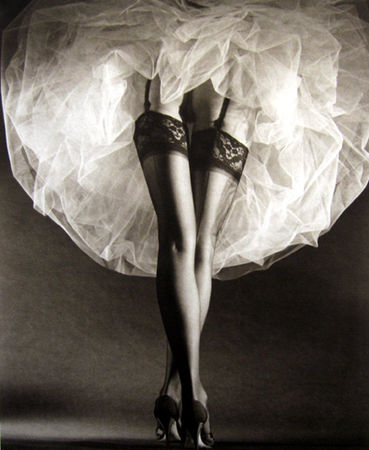 William Klein, Simone & Painting + Coffee, Rome, [Vogue] 1960. Gelatin silver print. Photo: Courtesy Peter Fetterman Gallery - http://elogedelart.canalblog.com/tag/Horst%20P.%20Horst/p10-0.html |
Useful Books and Articles

|
Exposure Supplement.pdf Size : 700.577 Kb Type : pdf |
|
|
Shutter Speed Supplement.pdf Size : 802.104 Kb Type : pdf |
|
|
ISO Supplement.pdf Size : 723.359 Kb Type : pdf |
|
|
Aperture Supplement.pdf Size : 705.937 Kb Type : pdf |
Michael Freeman's Creative Photography By Michael Freeman Published by Headline Book Publiching PLC This book was helpful in teaching me the basics behind photography. From technical issues with the camera and editing, to the process behind different styles of photography such as photojournalism and fashion photography, it had a bit of everything I needed. This book hugely helped me with my Technical Practise page. One of the most interesting aspects of this book was that it showed you the science behind the eye and the camera and it explained how well the camera forms an image the same way our eyes do. | 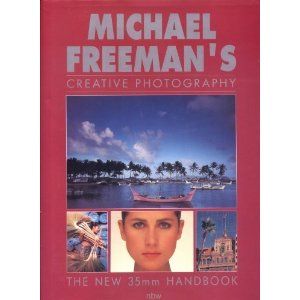 |
Photojournalism The World's Greatest News Photographers By Carlton Published by Carlton Books Limited This book was a great help at introducing me to many of the greatest news photographers in the 19th and 20th Century. The book introduced to me new techniques I have never seen before and showed me that with Photojournalism, anything is possible. From Robert Capa taking images of the war, from Martin Parr taking photos of a beach, photojournalism has little limitations. | 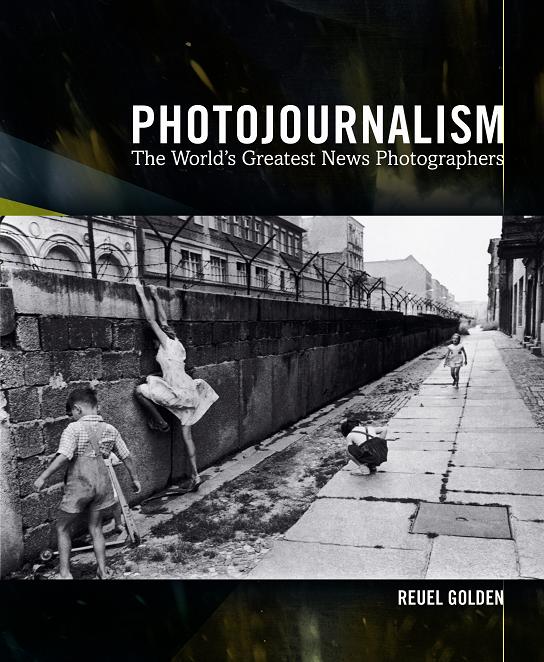 |
Magnum Magnum By Thomas and Hudson Looking further into Photojournalism, I wanted to look at the biggest Photojournalist company Magnum. This gave me an insight into more up to date Magnum photographers and the difference from Photojournalism in the late 1800 to now. | 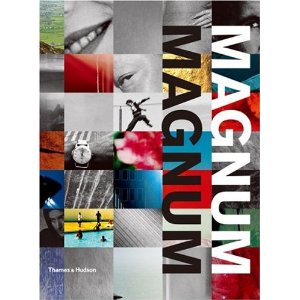 |
The History Of Photography By Beaumont Newhall As my project is mainly on photography, I thought it would be interesting to learn about how it all started. This book showed me an insight on the early theories and how the first kodak camera became available. | 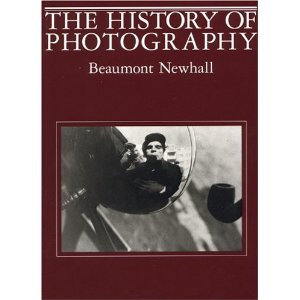 |
Technical Practise and Theories
Depth of Field and Aperture
I would say completely understanding Depth Of Field was one of my biggest issues with photography. The book Michael Freeman's Creative Photography helped me understand how DOF works. I knew that DOF depicted the nearest and furthest points within the image that was in focus, but I got confused when it came too matching it with aperture and shutter speed.
Selective Focusing - A small area of the image with a considerable depth where this area can be seen very clearly
Shallow DOF - Where the background of the image is out of focus
Deep DOF - Where the whole image is in clear focus
The aperture also effects the Depth Of Field. The amount of light that passes through the lens is adjusted by the aperture and is used to maintain the correct exposure. The bigger the aperture, the smaller F-stop number it is. For example, an image with a f-stop of f22 will have everything in focus, where as an image with the f-stop of 3.5 will have a smaller focal point. By having a bigger aperture it allows more light to enter the lens, allowing you to have a smaller focal point.
Rule of Thirds
I really care about the composition of an image. I feel that a well composed frame can help create a certain mood within the image. I like using breathing space in my images and the rule of thirds can help me to this.
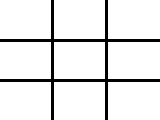
Framing is known as the process of creating composition and the rules of framing our essentially the same for photography and film. However, various styles of framing can have different meanings to people. What one person may find dramatic, aother may believe it to be pointless. The Rule of Thirds is a division between the frame. This is where the image is set into nine sections. These nine scetions act as 'Points of Focus' and make framing a lot easier. When framing an image, you've got to think about the "Headroom", "leading room", and "looking room". These three terms refer to the amount of space in the frame which is left empty. Head room refers too the amount of space which is left between the top of the frame and the subjects head. In most shots tighter than a medium shot, there should be little space left in the headroom or theres a risk of the image looking visually un-interesting. Leading and Looking room is the space left within the shot for the subject to move into or to look into. Without this empty space, the framing may look out of place and uncomfortable.